"Every year fewer and fewer words, and the range of consciousness always a little smaller.” (Orwell, 1984)
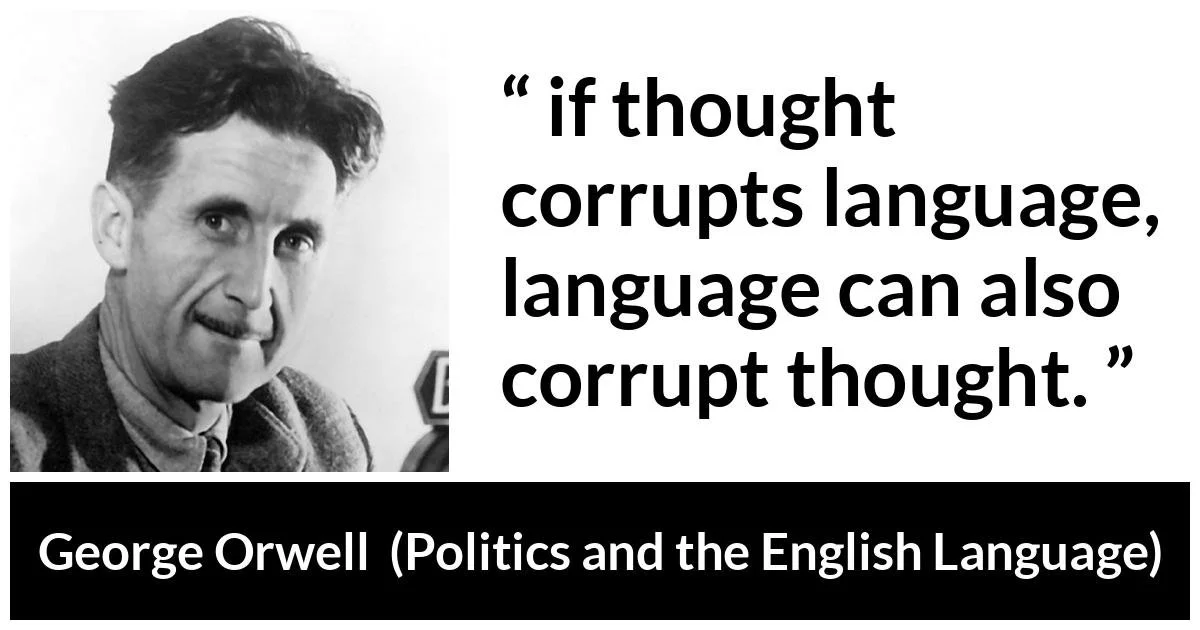
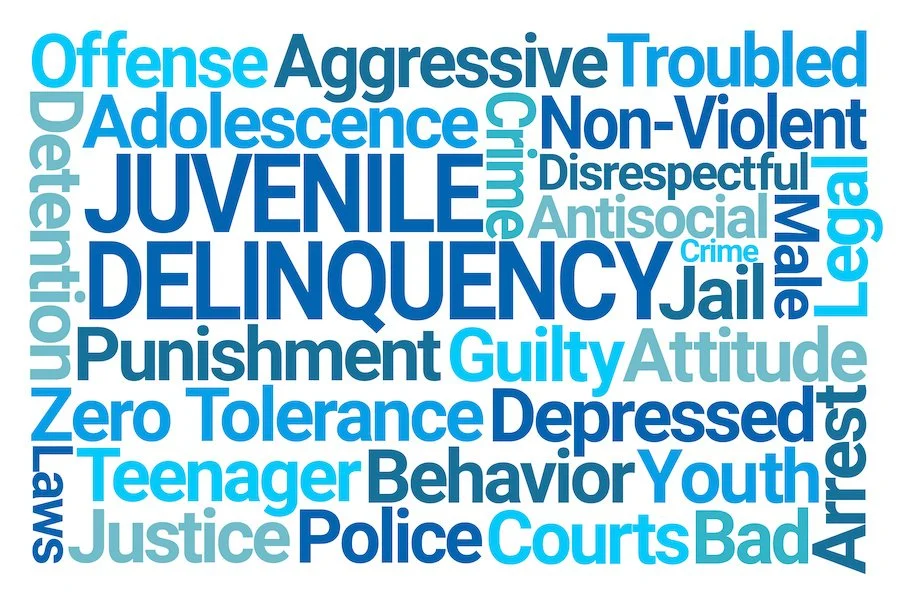
Orwell warned that unclear language corrupts thought itself. In juvenile justice, this warning is not metaphor, it is mechanism. When the system speaks in terms like "adjudication," "disposition," and "respondent," it strips away human meaning on both sides of the courtroom. Young people cannot grasp accountability through language they don't understand, and institutions that hide behind jargon are not genuinely thinking about rehabilitation.
The research confirms this. Snow and Powell's body of work at Monash University found that 63 percent of justice-involved youth have mild-to-severe language disorders, and that a young person's language skills directly predict their ability to understand guilty pleas, participate in proceedings, and make evidence-based decisions about their own cases. The justice system demands sophisticated verbal competence from the population least equipped to provide it, then treats the resulting disengagement as defiance.
Source: Snow, P.C. (2019). "Speech-Language Pathology and the Youth Offender." Language, Speech, and Hearing Services in Schools, 50(2), 324–339.
But the problem is not just comprehension. It is framing. Bryan, Walton, and Dweck at Stanford demonstrated that changing a single word changes conduct. "Please don't cheat" reduced cheating modestly. "Please don't be a cheater" eliminated it entirely. Across their research program, noun-based identity framing, (language that invites a person to claim who they are, not just what they do) produced a 14 percent increase in voter turnout, a 30 percent reduction in cheating, and a 28 percent boost in helping behavior among children. The difference between "you broke a rule" and "you can be someone who takes responsibility" is not semantic decoration. It is the difference between a teen who tunes out and one who engages.
Source: Bryan, C.J., Adams, G.S., & Monin, B. (2013). "When cheating would make you a cheater." Journal of Experimental Psychology: General.
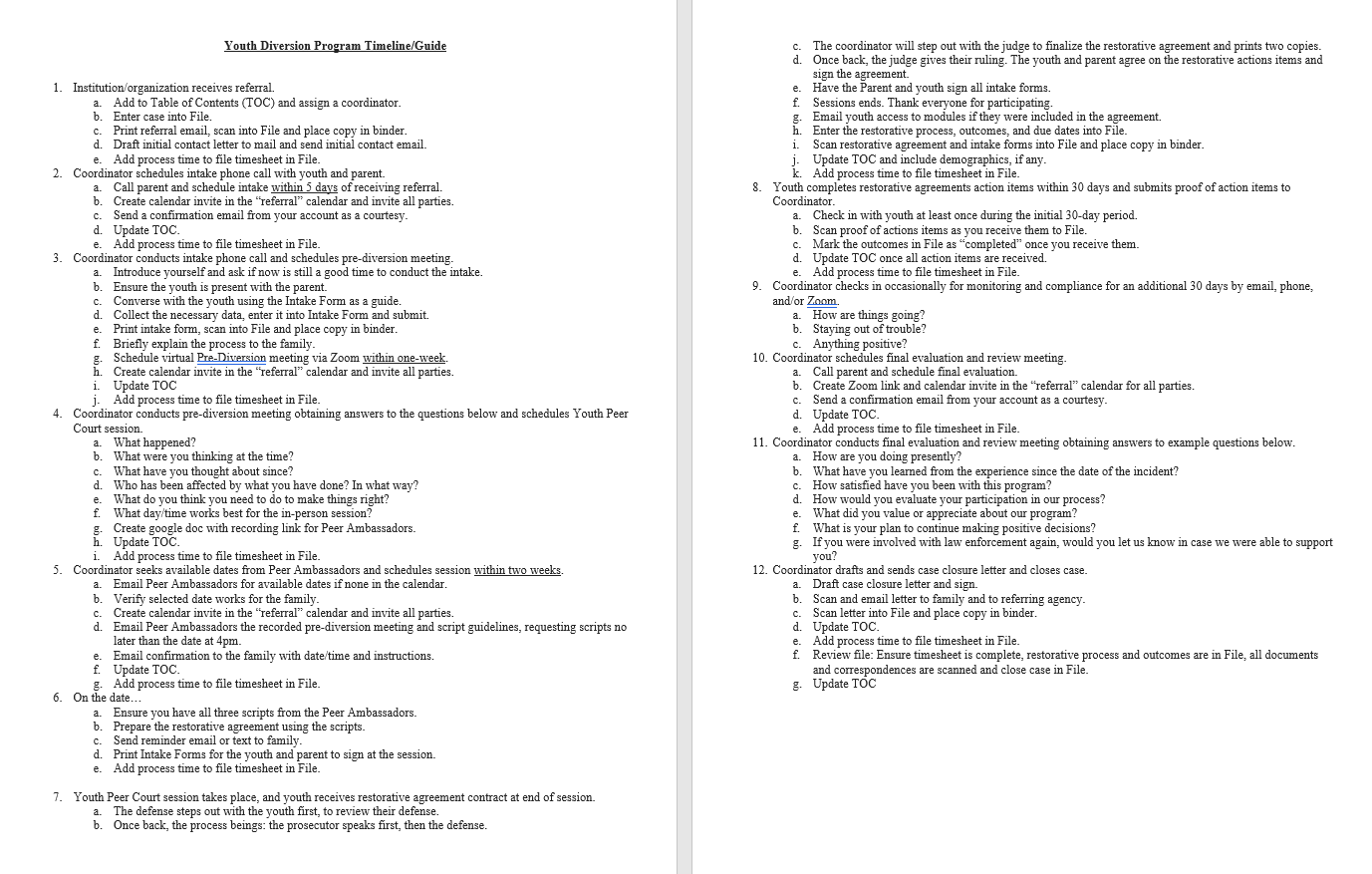
This document is an example of the problem our initiative Breaking Barriers seeks to help with. It is a detailed, procedurally correct document describing a sample restorative justice process for juveniles. It is also entirely inappropriate for the teenagers trying to understand what is happening to them, how they are supposed to behave, and how to make the most of it. The legalese and institutional language unintentionally excludes teens from meaningful participation. If the goal is to change behavior, this language must be reframed around identity and agency so that teenagers can understand, internalize, and act on it.
This is opportunity not a punishment. Seize it!"
〰️
This is opportunity not a punishment. Seize it!" 〰️
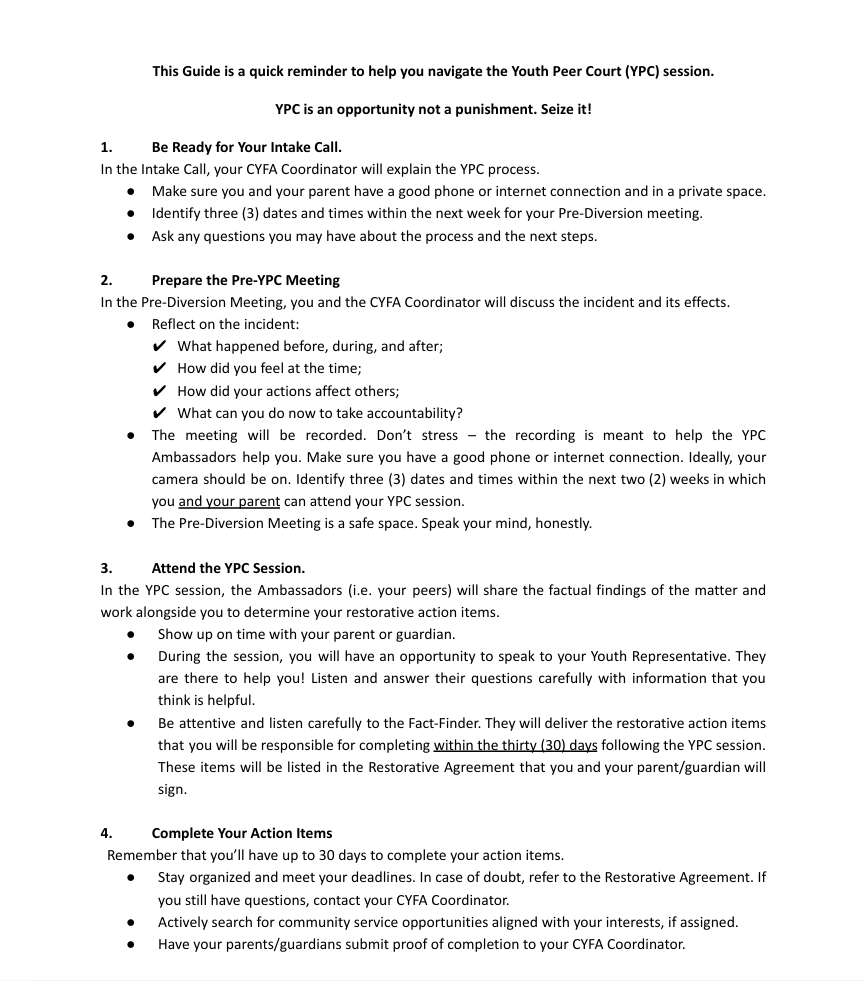
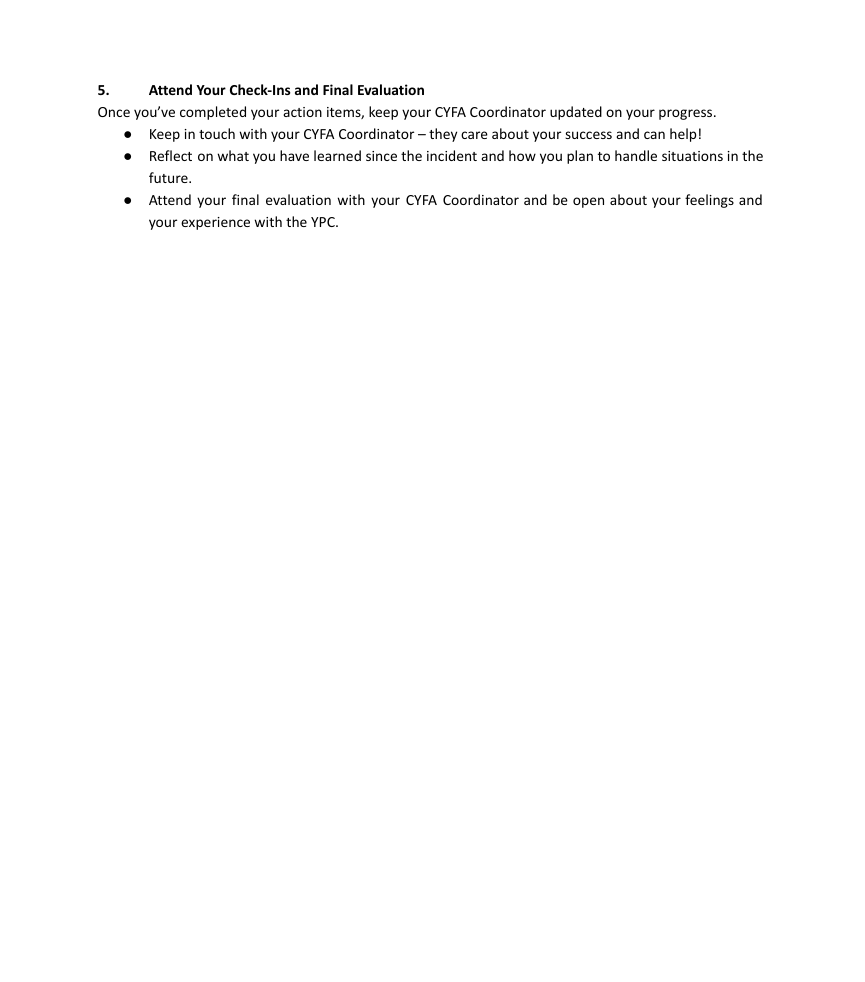
This is how Breaking Barriers redrafted it, reframing it around identity and agency so it could be shared directly with teenagers. Instead of seventy sub-steps of administrative procedure and legalese, the guide speaks to the teen in four clear stages, in language they can act on. It opens by reframing the entire experience: "YPC is an opportunity not a punishment. Seize it!" It asks the teen to reflect, not comply. And it gives them ownership over what comes next, turning accountability from something imposed on them into something they claim.